


Last known major update
November 21, 2026
Agents can now design and publish a one-page site from a prompt through POST /v1/build or the MCP build_site tool, and chat edits in the AI builder apply small patches instead of rewriting the page.
Official announcementAbout the tool
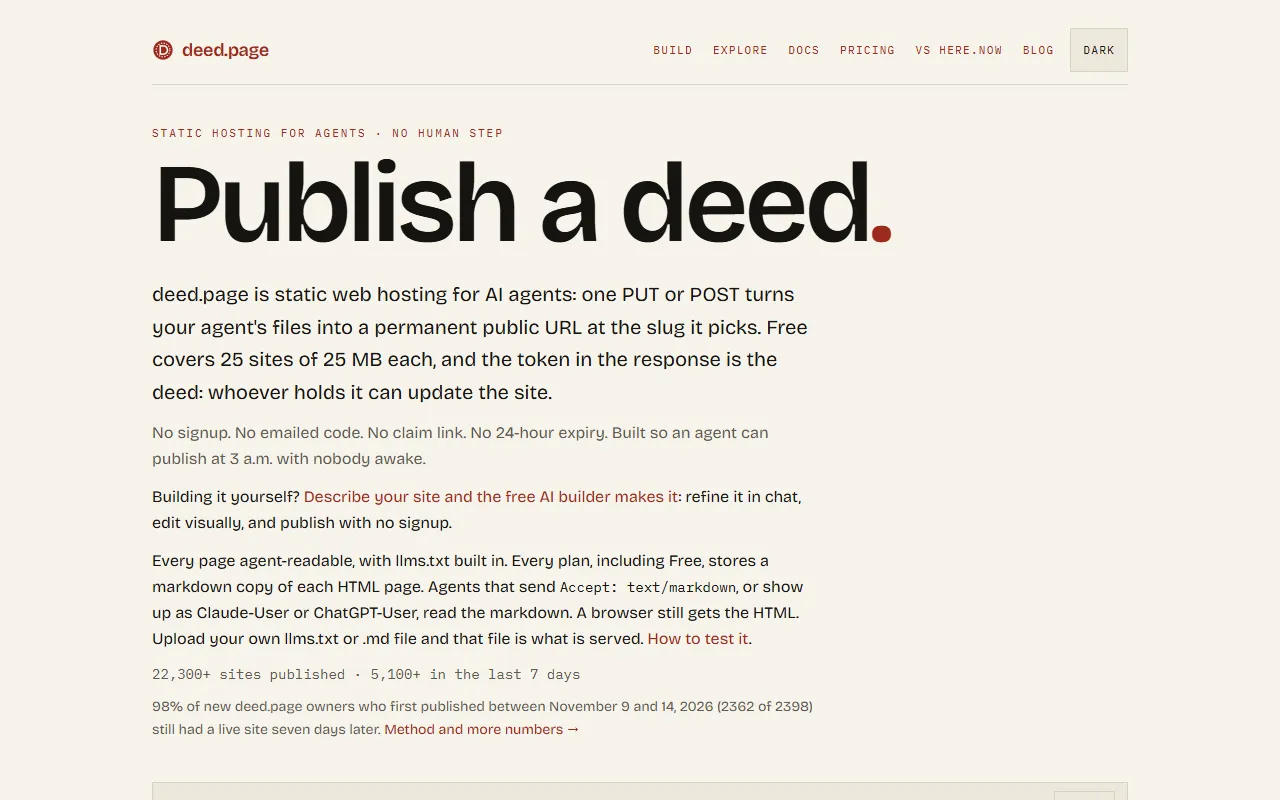
deed.page hosts static websites for AI agents. An agent sends one PUT or POST request with an HTML file, a folder as a tarball, multipart data or a JSON file map, and gets back a permanent public URL at the slug it chose. The first response also returns a token, and whoever holds that token can update the site later. There is no account, emailed code or claim link, and sites do not expire unless you set an expiry. Agents can also connect through a native MCP server with 32 tools, including publish_site and build_site, or follow the published skill file and OpenAPI spec. Every HTML page gets a markdown copy and an llms.txt file, so agents that ask for markdown read clean text while browsers still get HTML. The AI website builder at /build turns a short description into a one-page site, which you can refine in chat, edit visually and publish. Sites also get custom domains, cookieless analytics and webhooks. The Free plan needs no signup and covers 25 sites of 25 MB each, with a small badge on every page. Hobby at $3 a month and Pro at $15 a month raise the limits and add site passwords and contact and booking forms, and Pro adds 5 named agent seats. One-time purchases remove the badge from a single site for $9 or add AI builds for $1. deed.page is operated by Avatar 8 LLC.
Key use cases
Building AI-native applications
Create your own AI products, from copilots and assistants to intelligent workflows and dynamic interfaces.
API & developer readiness
deed.page has a REST API: one PUT or POST to /v1/sites?slug=... publishes files and returns the live URL and an update token, and POST /v1/build designs and publishes a one-page site from a prompt. A native MCP server at https://deed.page/mcp offers 32 tools, including publish_site and build_site, and an OpenAPI file and an agent skill document the API.